Breathtaker
Digital and Physical Design · 2019
Gamified spirometry app and custom hardware that turned respiratory therapy into a virtual bank heist
The Challenge
Dr. John Pearson, a Harvard Medical School fellow, needed a way to make spirometry testing engaging for patients. Traditional respiratory therapy is notoriously difficult to maintain—patients often abandon the routine exercises because they're boring and feel disconnected from any meaningful progress. His research required consistent patient engagement with spirometry data, but the standard approach wasn't working.
The Solution
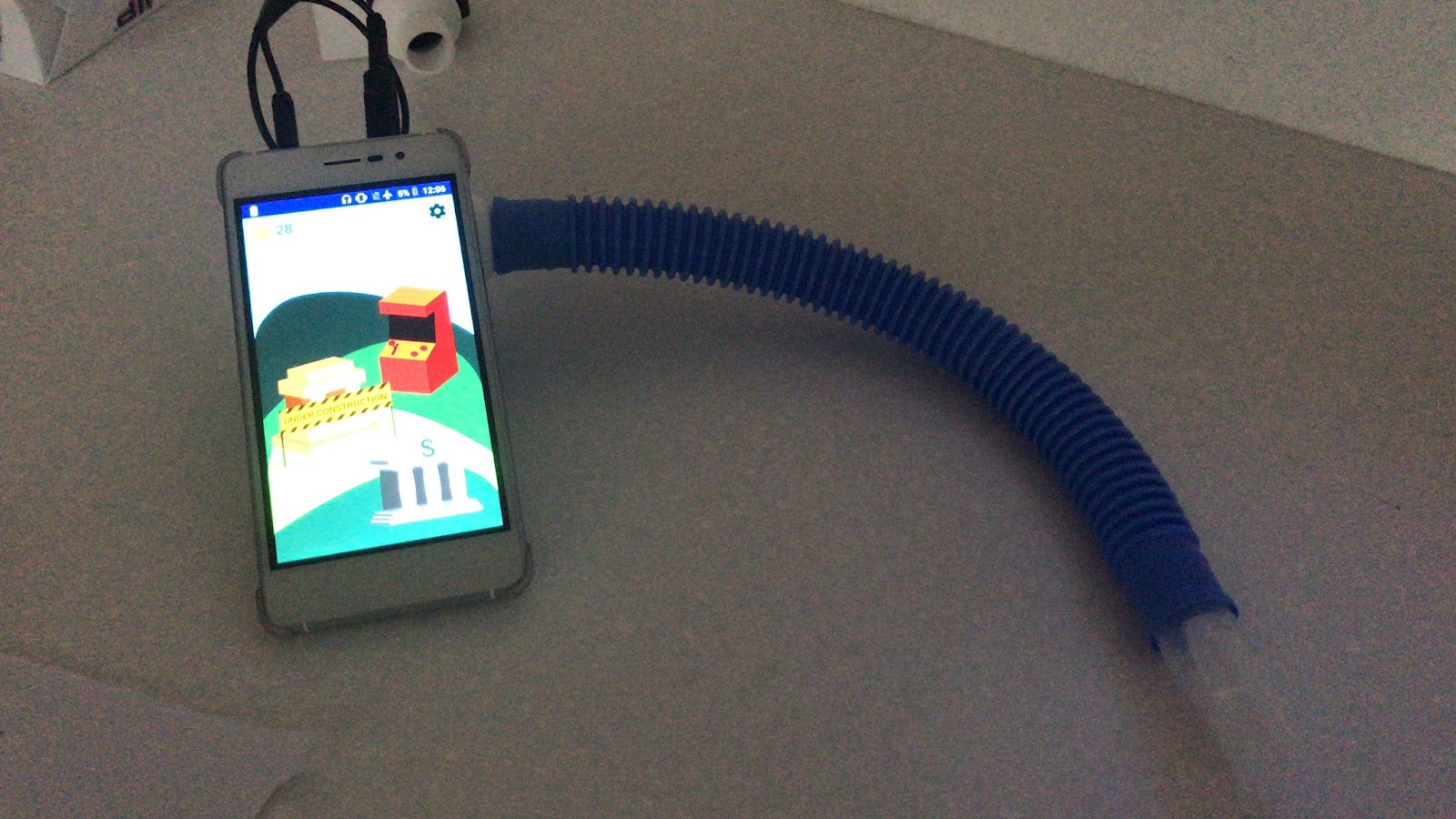
My team and I designed and built Breathtaker, a mobile game that transformed spirometry into an engaging experience. The concept was simple but effective: a virtual town where patients could interact with buildings by breathing into a custom sensor attached to their phone's headphone jack.
The core mechanic centered around a bank building where patients would "breathe in" coins by performing proper spirometry exercises. As they accumulated coins, they unlocked an arcade where they could spend their earnings on various mini-games. The system used peak airflow detection to measure breathing strength and consistency.
Design Process
My role spanned the entire project lifecycle. I handled initial UX design, creating wireframes and user flows that made the medical interface feel approachable and fun. The town metaphor provided an intuitive way to organize different activities while maintaining the serious medical purpose underneath.
I brought in a visual designer to create the game assets, but maintained creative direction to ensure the aesthetic supported both engagement and medical credibility. The design needed to appeal to patients while still feeling professional enough for clinical use.
Technical Implementation
The project required both hardware and software solutions. I designed custom physical attachments that connected standard spirometry hoses to the phone's audio jack, converting airflow into electrical signals that the app could interpret. The software side needed a robust state machine to handle the complex animation sequences and game logic.
I built an animation manager using Lottie to handle the game's animation sequences, ensuring smooth transitions between breathing exercises and reward animations. The state machine managed everything from sensor calibration to game progression, making the experience feel responsive and engaging.
Project Management
As the founder of Meiday Health, I handled all aspects of the project from contract negotiation to final deployment. This included scope definition, timeline planning, and ongoing client communication with Dr. Pearson. I also created a logistics plan for device deployment and patient onboarding.
Results
The project's success was measured in an unexpected way: we had to implement a cooldown timer after deployment because patients were using the bank game too frequently. This was remarkable for a medical device—patients were actually eager to perform their respiratory exercises, which is virtually unheard of in traditional spirometry.
The system successfully collected the data Dr. Pearson needed for his research while dramatically improving patient compliance. The gamification approach proved that even serious medical interventions can be made engaging when the right design principles are applied.
Key Learnings
This project reinforced the importance of understanding user motivation in medical contexts. The success came from recognizing that patients needed more than just data—they needed a sense of progress, achievement, and even fun. The technical challenge of integrating hardware sensors with mobile software also highlighted the value of robust state management in complex interactive systems.
The physical device component added another layer of complexity that required both engineering and design thinking. Creating a seamless experience between hardware and software is often overlooked in mobile development, but it's crucial for medical applications where reliability and ease of use are paramount.